
Importing Research Materials into Egypt: What the EDA Publishes and What It Does Not
Egypt's Drug Authority publishes detailed procedures for registering medicines and importing devices, and very little on research materials. Plan around what can be sourced, and ask the Authority for the rest.
Public guidance on importing research materials into Egypt is thinner than for any other country in this cluster, and it is more useful to say so than to fill the gap. What can be sourced is this: the Egyptian Drug Authority regulates pharmaceutical products and the raw materials used to make them, examines laboratory and diagnostic reagents, and releases imported pharmaceutical products and medical devices [1]. Customs separately requires cargo data and documents to be lodged electronically before the goods ship [5]. The Authority's detailed English-language procedures cover registering medicines and importing medical devices. We found no published EDA procedure written for a laboratory importing research material.
So this article does two jobs. It sets out what the official documents establish, and it marks plainly where a requirement has to be confirmed with the Authority before an order is placed. Anything in the second category should be treated as unknown until you have a written answer.
The Egyptian Drug Authority and who else controls imports
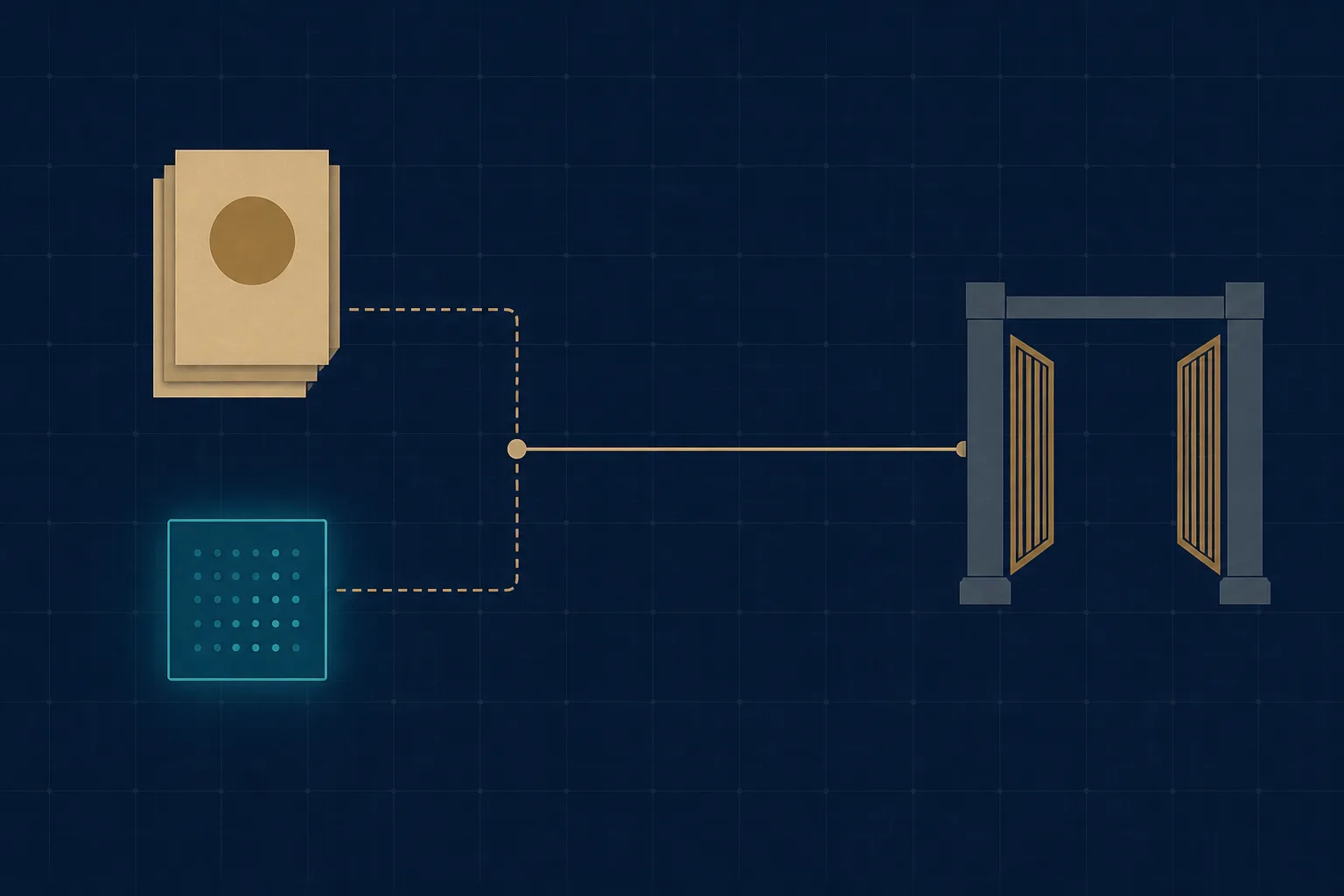
The Authority was established by Law No. 151 of 2019, replacing the National Authority for Pharmaceutical Control and Research and the National Authority for Research and Control of Biological Products [1]. Its own description gives the remit that matters here: it regulates "the registration, circulation, and control of pharmaceutical products and the raw materials used in their manufacture", it "examines and analyses laboratory and diagnostic reagents to verify their quality", it licenses private laboratories within its field, and it "releases imported pharmaceutical products and medical devices subject to the provisions of this law" [1]. Fees for its services are set in the executive regulations of that law, issued by Prime Minister's Decision No. 777 of 2020 [2].
Import control is shared. The customs side runs through Nafeza, the national single window, which operates the Advance Cargo Information system [5]. Whether any other body has an interest depends on what the material is, and we have not found a primary source that maps research chemicals to a single agency. That is the first question to put to the Authority.
Registration and import licensing
For medicines, the Authority's registration rules are detailed. Its guideline under Chairman Decree No. 450 of 2023, in its fifth version effective 1 November 2025, relies on decisions of stringent regulators and sets registration periods of one to six months from receipt of a complete dossier, depending on whether and where a reference product is approved [4]. Imported products are accepted only if marketed in one of the Authority's reference countries, with exceptions referred to its scientific committees [4].
The Authority has also published a guide on registering synthetic peptide medicines that refer to a reference product of recombinant origin. It applies to products manufactured in Egyptian factories for local marketing, and it directs the manufacturer to apply to the General Administration for Importation and Customs Release to import raw materials [3]. Two things follow. The Authority's published attention to peptides is as registered medicines made in Egypt, not as research materials. And the General Administration for Importation and Customs Release is the named office for raw-material imports, which makes it a sensible address for a classification question.
For medical devices only, the Authority publishes an import route for a research protocol: an online application with a reply within two working days, a review within three, a 90-day window to complete missing documents before the file is treated as rejected, and an import permit valid for one year [2]. It is evidence that the Authority thinks in terms of research imports. It does not extend by analogy to chemicals, and nobody should assume it does. Put the question in writing: the material's specific name, its intended laboratory use, the tariff heading, and what the research-use-only designation actually asserts — then keep the reply.
Documentation, and the legalisation that surprises first-time importers
The device guideline shows what the Authority expects of foreign documents. Distribution or agency contracts, and letters establishing a supplier's right to supply a manufacturer's goods into Egypt, must be authenticated by the chamber of commerce and the Egyptian embassy in the country of origin [2]. Quality certificates from the Authority's reference countries may be accepted without that step where the Authority verifies them directly with the issuer; otherwise they too must be legalised [2]. That is device practice, not a published rule for research material, but it is the best available signal. Ask the supplier early whether it can obtain embassy legalisation, because it is done in the exporting country and cannot be added at the Egyptian end.
Customs adds its own pre-shipment step. Nafeza describes Advance Cargo Information as a procedure requiring cargo data or documents at least 48 hours before shipment from the exporting country: the Egyptian importer registers on Nafeza, submits the commercial invoice and bill of lading, and obtains an ACID number before import operations begin, while the foreign exporter must register with the system's certified provider [5]. Nafeza dates the mandatory phase from 1 October 2021 [5]. Trade sources report later enforcement dates for particular modes; confirm the current position for air freight with your broker against Nafeza itself.
| Question | What the sources establish | Status |
|---|---|---|
| Who regulates raw materials and reagents | The EDA, under Law No. 151 of 2019 | Sourced |
| Pre-shipment cargo data | ACID on Nafeza before shipment; exporter registered with the provider | Sourced |
| Legalised supplier documents | Required for device imports; likely to be asked | Confirm for your material |
| Import route for laboratory research material | No published EDA procedure found | Confirm in writing |
| Fees and turnaround for that route | Not published for this case | Confirm in writing |
Port clearance and inspection
The Authority's release of imported products follows its own examination: the same page that gives its release power describes it conducting the tests and analyses that verify quality [1]. A consignment may therefore be opened, sampled and held, and it is worth understanding what happens when a consignment is opened at the border before choosing packaging. WHO's model guidance asks that a shipment's temperature history be known rather than assumed [6]; a logger inside the package and a hold time sized for analysis, not just transit, are the minimum.
Why North African routing differs from sub-Saharan
Two features set Egypt apart from the other countries in this cluster. First, the gate before loading is a data gate: without an ACID number the importer and exporter cannot start the shipment properly, so the Egyptian importer has to be registered and active on Nafeza before the supplier books freight [5]. Second, Egypt is outside the East African joint assessment, so nothing registered through that route carries any weight in Cairo; registration runs on the Authority's own reference-country and reliance rules [4]. Treat Egypt as its own system rather than as an extension of a sub-Saharan plan.
Realistic planning assumptions
- Assume nothing about classification until the Authority has answered in writing; address the question to the General Administration for Importation and Customs Release [1][3].
- Assume foreign documents will need chamber of commerce and embassy legalisation, and start that in the exporting country before the order [2].
- Register the importer on Nafeza and confirm the exporter's registration with the ACI provider before freight is booked [5].
- Match the invoice, bill of lading and ACID data exactly; the ACID is issued against the documents you submit [5].
- Size packaging and hold time for testing and analysis on arrival, and file the in-package temperature record with the release documents [1][6].
None of this replaces a direct answer from the Authority. It is the smallest set of assumptions that the published record supports, and a reason to ask the remaining questions before money moves rather than after the goods land.
References
- About the Egyptian Drug AuthorityEgyptian Drug Authority (EDA)
- Regulatory Guideline of Issuance of Import Approvals of All Types of Medical Devices (EDREX:GL.CAMD.008, version 1)Egyptian Drug Authority, Central Administration of Medical Devices, 2022
- Regulatory Guide on the Registration of Synthetic Peptides Human Pharmaceutical Products that refer to a Reference Peptide Product of rDNA Origin (EDREX:GL.CAPP.036)Egyptian Drug Authority, Central Administration of Pharmaceutical Products, 2023
- Regulatory Guideline on Organizing the Rules and Procedures of Registration of Human Pharmaceutical Products in Accordance with the Different Cases, Based on EDA Chairman Decree No. 450 of 2023 (EDREX:GL.CAPP.027, version 5)Egyptian Drug Authority, Central Administration for Pharmaceutical Products, 2025
- Advance Cargo Information SystemNafeza, Egypt's National Single Window for Foreign Trade Facilitation
- Model guidance for the storage and transport of time- and temperature-sensitive pharmaceutical products (Annex 9, WHO Technical Report Series No. 961)World Health Organization, 2011